

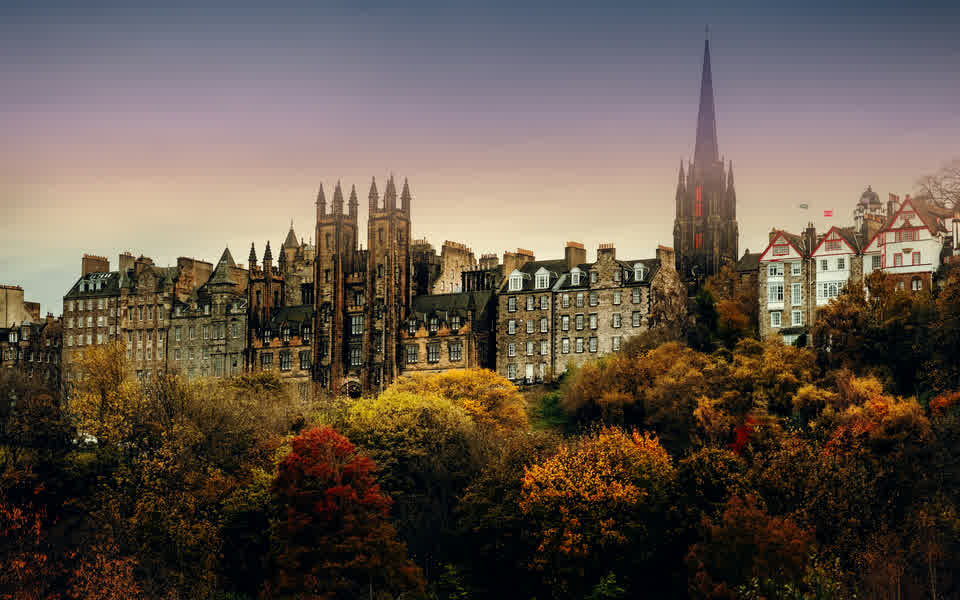
A graduation in Manchester, a family visit in Birmingham, a conference in London or a first look at Edinburgh: most UK trips start with the same question. Do you need a UK visitor visa, or is an ETA (electronic travel authorisation) enough?
The answer depends on the passport you travel on. Citizens of India, Nigeria, the Philippines, South Africa, Colombia, Vietnam, mainland China, Pakistan and many other countries must apply for a Standard Visitor visa before they travel. Citizens of the US, Canada, EU countries, Japan and the Gulf states usually need an ETA instead. This guide explains who needs which, the official fee, the documents UK Visas and Immigration (UKVI) suggests, how biometrics work and the common reasons for refusal, using only official GOV.UK guidance. Voyfaro does not apply for visas or book visa appointments.
UK visitor visa: the quick answer
- What it is: permission to visit the UK for tourism, family visits, business meetings, short courses and other “permitted activities”. You can usually stay for up to 6 months per visit.
- Who needs one: nationals of the countries on the UK’s visa national list, stateless people and anyone travelling on a document that is not a national passport, unless the document was issued by the UK. Use GOV.UK’s Check if you need a UK visa tool for your passport.
- Who usually does not: nationals on the ETA list, such as US, Canadian, Australian, EU, Japanese, Brazilian and Gulf citizens. They apply for a £20 ETA instead. British and Irish citizens need neither.
- Official fee: £135 for a visa of up to 6 months. Long-term visas cost £506 (2 years), £903 (5 years) or £1,128 (10 years). Chinese nationals applying in mainland China under the Chinese visa scheme pay £135 for the 2-year visa. The Home Office fee update of 8 October 2026 left these unchanged.
- How to apply: online on GOV.UK, then attend a visa application centre for your fingerprints and photo. The centre could be in another country.
- When: the earliest you can apply is 3 months before you travel.
- Decision time: usually within 3 weeks after your appointment. You may be able to pay £500 or £1,000 for a faster decision, where it is offered.
- What you get: an eVisa, a digital record you access through a free UKVI account.
- The key test: you must show you are a genuine visitor who will leave at the end of the visit and can pay for the trip. GOV.UK says there is no set amount of money you must show.
Who this applies to
This guide is for anyone planning a short visit to the UK who may need a visa. That usually means:
- Visa nationals. On 18 October 2026 the Immigration Rules visa national list included, among many others, Bangladesh, mainland China, Colombia, Egypt, Ghana, India, Indonesia, Jamaica, Jordan, Kenya, Morocco, Nigeria, Pakistan, the Philippines, South Africa, Sri Lanka, Thailand, Türkiye (Turkey), Ukraine and Vietnam.
- Stateless people and people with non-passport travel documents. The same rules list them as needing a visa, unless the travel document was issued by the UK.
- ETA nationals who choose a visa. GOV.UK says that if you have been refused entry to the UK before or have a criminal record, you may want to apply for a Standard Visitor visa even if you do not need one.
- Longer academic or medical visits. Academic visits of more than 6 months need a visa whatever your nationality.
Your passport decides, not where you live: a Filipino citizen living in Dubai still needs a visa. See our guides to the UK ETA and to UK ETA or visa rules for UAE and Saudi residents for the ETA side. If you are only changing planes in the UK, read UK transit visas and ETA rules instead.
If you want to marry, register a civil partnership or give notice of either in the UK, a Standard Visitor visa is not the right route. GOV.UK says you need a Marriage Visitor visa.
Visa or ETA: how the two compare
| Standard Visitor visa | ETA | |
|---|---|---|
| Who uses it | Visa nationals, and anyone who chooses a visa | Nationals on the ETA list |
| Official fee | £135 (up to 6 months) | £20 |
| How you apply | Online, then a visa application centre appointment | GOV.UK online or the UK ETA app |
| Usual decision time | Within 3 weeks | Usually within a day, up to 3 working days |
| Length of each visit | Usually up to 6 months | Up to 6 months |
| Still need to meet the visitor rules? | Yes | Yes |
Neither one guarantees entry. GOV.UK says that even if you do not need a visa, you must still meet the Standard Visitor rules and may be asked questions at the UK border.
What you can and cannot do as a visitor
GOV.UK lists the “permitted activities”. You can visit for:
- tourism or a holiday
- seeing family or friends
- volunteering for up to 30 days with a registered charity
- certain business activities, such as meetings, interviews, conferences, negotiating deals and trade fairs (you cannot sell things), as long as you are not paid by a UK-based organisation or client
- a recreational course of up to 30 days, or study at an accredited institution for up to 6 months
- certain paid engagements as an expert in your profession, called “permitted paid engagements”
- private medical treatment, and some academic, Erasmus+ and school exchange visits
You cannot:
- do paid or unpaid work for a UK company or as a self-employed person, unless it is a permitted paid engagement
- claim public funds (benefits)
- live in the UK for long periods through frequent or back-to-back visits
- marry, register a civil partnership or give notice of either
Eligibility: what you must show
Every Standard Visitor must have a passport or travel document valid for the whole stay. GOV.UK says you must also be able to show that:
- you will leave the UK at the end of your visit
- you can support yourself and any dependants during the trip, or someone else will fund you
- you can pay for your return or onward journey, or someone else will
- you will not live in the UK through frequent or successive visits, or make it your main home
The Home Office caseworker guidance puts the burden on you. The decision maker must be satisfied “on the balance of probabilities”, meaning more likely than not, that you are a genuine visitor.
How much does a UK visitor visa cost?
These are the official Home Office fees, which were unchanged in the update of 8 October 2026.
| Visa | Official fee | Maximum stay |
|---|---|---|
| Standard Visitor visa | £135 | 6 months |
| Long-term visa, 2 years | £506 | 6 months per visit |
| Long-term visa, 5 years | £903 | 6 months per visit |
| Long-term visa, 10 years | £1,128 | 6 months per visit |
| Visitor for private medical treatment | £234 | 11 months |
| Visiting academic | £234 | 12 months |
| Priority service (where offered) | £500 extra | Usually a decision within 5 working days |
| Super priority service (where offered) | £1,000 extra | Usually a decision by the end of the next working day |
Chinese nationals applying in mainland China under the Chinese visa scheme pay £135 for a 2-year visa, according to a footnote in the official fee table. Check the official fee table before you pay.
What to know before you pay:
- Each person pays. Family members each need their own application, fee and appointment.
- Local currency. GOV.UK’s visa fees tool shows the cost in the country you are in.
- Appointments. GOV.UK says most visa application centres offer free appointments within 5 working days. In some places a standard appointment costs £76.50. Optional extras, such as document scanning, do not make your application more likely to succeed.
- Refunds. You get your fee back only if you cancel before UKVI starts processing. There is no refund if you are refused or given a shorter visa.
- Long-term visas. UKVI may give you a shorter visa than you asked for, with no refund. For applicants under 18, a long-term visa lasts only until 6 months after their 18th birthday.
- Visits over 6 months. GOV.UK says you may need a tuberculosis (TB) test certificate if you are visiting for more than 6 months, for example on the 11-month medical or 12-month academic visa. It depends on where you have lived. Check GOV.UK’s TB test page.
- Right of abode. If you have the right of abode (for example, you are a British citizen), GOV.UK says your application will not be accepted and you will not get a refund.
How to apply, step by step
- Check that you need a visa with GOV.UK’s Check if you need a UK visa tool.
- Apply online through the GOV.UK Standard Visitor visa page, no earlier than 3 months before you travel. You can save the form and finish it later.
- Answer the questions. The form asks for your travel dates, where you will stay, the expected cost of the trip, your home address, your parents’ names, your yearly income and any criminal, civil or immigration offences. It may also ask for your travel history for the past 10 years, your employer, your partner, who is paying and any family in the UK. If you are visiting for more than 6 months, you may need to provide a TB test certificate.
- Pay the fee and book an appointment at a visa application centre. If your country has no centre, you choose one in another country. You must book and attend within 240 days of submitting your application.
- Attend your appointment. You prove your identity with your passport, have your fingerprints and photo taken, and provide your supporting documents. Some applicants are told they can use the UK Immigration: ID Check app instead. You get your passport back the same day.
- Wait for the email. Most decisions arrive within 3 weeks. Check your spam folder.
- Set up your UKVI account and link it to your eVisa. There is no charge. Before you travel, check that your eVisa and passport details are correct and match the details you give your airline.
Children
Children under 16 must attend the appointment with an adult aged over 18. Children under 5 have a photo taken but do not give fingerprints. A child travelling without a parent needs written consent from a parent or guardian, their contact details and details of where and with whom the child will stay. A child travelling with an adult must name that adult in the visa application, with extra details if the adult is not their parent. GOV.UK says you can name up to 2 adults.
If the child will stay with someone else, that person also gives written consent for the child to stay with them. UKVI’s supporting documents guide suggests a birth certificate or adoption papers showing the relationship to at least 1 parent or guardian, and a copy of the photo page of a parent’s or guardian’s passport. Special rules apply if a child under 16 (or under 18 with a disability) will be looked after for more than 28 days by someone who is not a close relative. This is called private foster care, and the local authority must be told. See GOV.UK’s If you’re under 18 page.
Documents and evidence of funds and ties
UKVI’s guide to supporting documents lists documents you “might want to provide”. It says the list is not complete and that providing any document does not guarantee a visa. Useful documents include:
- Your passport. Previous passports can show your travel history.
- Your ties at home. A letter from your employer on headed paper with your role, salary and length of employment. Students can provide a letter from their school or university confirming enrolment and leave of absence. Self-employed people can provide business registration documents or recent invoices.
- Legal residence. If you apply from a country where you are not a citizen, for example a Kenyan citizen living in Qatar, provide proof that you live there legally.
- Your funds. Bank statements or building society books that show where the money came from, and proof of earnings. The caseworker guidance says money you rely on must be held in a financial institution permitted under Appendix Finance of the Immigration Rules.
- A sponsor, if someone else pays. Evidence of what support they will give and how, that they can afford it, your relationship, and their legal status in the UK if they live there.
- Purpose of visit. For example, an invitation from a conference organiser or a letter from your employer for a business trip.
- Translations. Any document not in English or Welsh needs a full translation with the translator’s confirmation, the date, their name, signature and contact details.
How UKVI looks at your money
The caseworker guidance says there is no set level of funds. Instead, the decision maker looks at the likely cost of your trip and your financial commitments at home, such as rent and dependants. Your income or savings, minus those commitments, must cover the trip and be reasonable for your situation. It also says that:
- the money you declare on the form should match your documents
- if most of the money arrived in your account recently, the decision maker may check where it came from
- support from another person that you did not declare may not be counted
Documents UKVI says are less useful
The same guide lists documents you should not use as evidence. Among others, they include bank statements or letters more than 1 year old, credit card statements, driving licences, notarial certificates, photocopies of bank cards, certificates for leisure activities, hotel bookings, flight bookings (unless you are transiting), travel insurance, personal photographs, business cards, car ownership papers and a sponsor’s utility or council tax bills. The separate Home Office caseworker guidance tells decision makers not to consider documents on that list if they are sent. GOV.UK also says you should not book travel until you get a decision.
Common refusal reasons in official guidance
The Home Office Visit caseworker guidance (version 18.0, published 8 October 2026) tells staff to refuse if the evidence does not show, more likely than not, that you meet the rules. It lists reasons that may cast doubt on whether someone is a genuine visitor, including:
- few family or economic ties to the country where you live, with several family members in the UK
- you, your sponsor or a close family member deceived the Home Office in an earlier application
- your answers and your sponsor’s answers do not match on facts the sponsor should know
- the information you gave could not be verified
- the reasons for the visit are not credible for your circumstances
- your travel history shows you are, in effect, living in the UK through frequent or long visits
It also says that being removed from, or refused entry to, another country may count against you, depending on the circumstances. On the other hand, a record of following UK immigration rules, and travel to countries such as the US, Canada, Australia, New Zealand, Ireland, Schengen countries or Switzerland, may help. For first-time travellers, the guidance says the decision maker relies on other evidence.
Applications can also be refused on “suitability” grounds under Part Suitability of the Immigration Rules. That is a separate test from whether you are a genuine visitor.
If you are refused, your letter explains why and tells you whether you can ask for an administrative review or appeal. If a review is offered, GOV.UK says you must apply within 28 days of the decision and it costs £80. Your passport is returned if it was kept. UKVI does not repay travel costs if you are refused.
Common mistakes and scams
- Paying an agent who promises a “guaranteed” visa. Only UKVI decides. No agent, website or centre can guarantee a result.
- Paying in cash or by money transfer. GOV.UK says you will never be asked to pay for a visa that way. Report visa and immigration scams to Report Fraud.
- Using a copycat website. Apply only through the GOV.UK pages linked in this guide. GOV.UK warns against websites that imitate government services.
- Buying non-refundable flights first. GOV.UK says not to book travel until you have a decision, and a flight booking is not useful evidence.
- Large, unexplained deposits. Money that appears in your account shortly before you apply may be checked. Show where it came from.
- Different stories. Make sure your form, your documents and your sponsor’s letter agree.
- Applying too early or too late. You cannot apply more than 3 months ahead. Allow at least 3 weeks after your appointment.
- Travelling on a new passport without updating your UKVI account. Your eVisa is linked to your passport details, so update the account before you fly.
Planning your UK trip
- Flights: compare routes to London, Manchester, Birmingham and Edinburgh once your visa is approved. Compare flights.
- Hotels: a free-cancellation booking keeps your plans flexible. Compare hotels.
- Mobile data: an eSIM can give you data for maps and rail apps when you land. See eSIM options.
- Travel insurance: UKVI does not treat travel insurance as useful visa evidence, but a policy can cover medical costs, delays and lost baggage, depending on its terms. What to check in travel insurance.
How Voyfaro can help
- Visas: we point you to the official GOV.UK pages and explain them in plain English. We do not apply for, issue or guarantee visas, and we do not book visa appointments. See our visa guidance.
- Bookings: we help you compare flights, hotels and eSIMs from partners we reach through the Travelpayouts affiliate network.
- You stay in control: you book and pay directly with the partner.
- Questions? Contact us on WhatsApp (messages only, no phone calls) with your passport, dates and who is travelling. Asking is free.
FAQ
Do I need a visa to visit the UK?
It depends on your nationality. Nationals on the UK visa list, such as Indian, Nigerian, Filipino, South African and Colombian citizens, need a Standard Visitor visa. Nationals on the ETA list, such as US, Canadian, EU and Gulf citizens, need a £20 ETA instead. British and Irish citizens need neither. Use GOV.UK’s Check if you need a UK visa tool for your passport.
How much is a UK visitor visa?
£135 for a visa of up to 6 months. Long-term visas cost £506 for 2 years, £903 for 5 years and £1,128 for 10 years, with stays of up to 6 months per visit. Chinese nationals applying in mainland China under the Chinese visa scheme pay £135 for the 2-year visa. The fee update of 8 October 2026 left these unchanged.
How long does a UK visitor visa take?
GOV.UK says you will usually get a decision within 3 weeks once you have applied online, attended your appointment and provided your documents. Where available, the priority service (£500) usually gives a decision within 5 working days, and super priority (£1,000) by the end of the next working day.
How much money do I need in my bank account for a UK visitor visa?
There is no set amount. The Home Office guidance says the decision maker compares the likely cost of your trip with your income or savings after your commitments at home, such as rent and dependants. Your bank statements should show where the money came from.
Do I need to book flights and a hotel before I apply?
No. GOV.UK says you should not book travel until you get a decision, and UKVI’s supporting documents guide lists flight and hotel bookings as less useful evidence. You do give your travel dates and where you will stay on the form.
Can I apply for a UK visitor visa from a country where I live but am not a citizen?
Yes. You apply online and choose a visa application centre. If you are not a citizen of that country, UKVI suggests you provide proof that you live there legally. The visa rule itself still depends on your passport.
Can I extend my stay as a visitor?
Only up to a total of 6 months in most cases. GOV.UK says you apply from inside the UK before your permission ends and pay £1,172. Do not travel outside the UK, Ireland, the Channel Islands or the Isle of Man until you get a decision, or your application will be withdrawn. Longer stays are possible only for medical treatment, some academics and certain medical graduates.
Can Voyfaro apply for my UK visa?
No. Only UK Visas and Immigration decides visa applications, and you apply yourself on GOV.UK. We can help you compare flights, hotels and eSIMs for your trip.
Sources
Official pages we checked on 18 October 2026:
- GOV.UK, Visit the UK as a Standard Visitor (permitted activities, eligibility, three outcomes by nationality, visitor rules apply without a visa, criminal record and refusal advice, Marriage Visitor visa)
- GOV.UK, Visit on business (business activities only if not paid by a UK-based organisation or client)
- GOV.UK, Visit as an academic (visits over 6 months need a visa for every nationality)
- GOV.UK, If you’re under 18 (parental and host consent, up to 2 adults named, private foster care)
- GOV.UK, Apply for a Standard Visitor visa (fees, long-term visas, application questions, TB certificate for visits over 6 months, translations, appointment, 3-week decision, eVisa, right of abode, cancellation refunds)
- GOV.UK, When you can extend your stay (£1,172 fee, 6-month total, application withdrawn if you travel outside the UK, Ireland, the Channel Islands or the Isle of Man before a decision)
- UK Visas and Immigration, Home Office immigration and nationality fees, 8 October 2026 (visit, long-term, academic, ETA, priority and administrative review fees unchanged; footnote: £135 for the 2-year visa for Chinese nationals applying in mainland China under the Chinese visa scheme)
- GOV.UK, Visa fees tool (cost in the country you are in)
- GOV.UK, How to apply for a visa to come to the UK (biometrics, children, appointment costs, 240-day rule, optional services, refusal letters, no reimbursement of travel costs)
- GOV.UK, Find a visa application centre (centres by country)
- GOV.UK, Get a faster decision on your visa (priority £500, super priority £1,000)
- GOV.UK, Visa processing times: applications outside the UK (Standard Visitor: 3 weeks; do not book travel before a decision; reasons for delays; updated 9 September 2026)
- UK Visas and Immigration, Visiting the UK: guide to supporting documents (suggested documents, sponsors, children’s birth or adoption papers and parent’s passport copy, TB test checks, translations, documents not to use; updated 8 October 2026)
- Home Office, Visit: caseworker guidance (version 18.0, 8 October 2026: burden and standard of proof, genuineness, ties to country of residence, travel history, funds held in institutions permitted under Appendix Finance, documents not to consider, third-party support, long-term visas, suitability)
- GOV.UK, Immigration Rules Appendix Visitor: Visa national list (visa nationalities, stateless people and non-passport documents not issued by the UK)
- GOV.UK, Immigration Rules Appendix ETA National List (ETA nationalities)
- GOV.UK, Get an electronic travel authorisation (ETA) (£20 fee, imitation websites, no guarantee of entry)
- GOV.UK, Apply for an ETA (decision usually within a day, up to 3 working days)
- GOV.UK, Tuberculosis tests for visa applicants (who needs a TB test)
- GOV.UK, Check if you need a UK visa (official checker)
- GOV.UK, eVisas: access and use your online immigration status (UKVI account, free access, travelling with an eVisa, updating passport details)
- GOV.UK, Ask for a visa administrative review (refusal letter says whether a review is possible; apply within 28 days; £80 fee)
- GOV.UK, Report visa and immigration scams (no payment by cash or money transfer; Report Fraud)